
If you're five years from selling your business, you're already in the most expensive part of the trade.
You've spent twenty-five years building one thing. The next five matter more.
You know the position you're in. Most of your net worth is in one business. You're a few years out from a possible sale, or wondering if you should be. The CPA just showed you the tax projection. A peer in your group sold and lost half of it inside five years. Your wife asked at dinner what's after the sale, and the honest answer is you haven't built it yet.
The instinct is to wait. Sell first, figure out the rest later. The math says the opposite. Almost everything you can do to lower the tax bill, replace the income, and build something inheritable has to happen before the wire hits.
That's the trade you're already making. Every year you put it off is a year of optionality you don't get back.
I'm not pitching anything here. I'm telling you what I learned from two places. From watching my dad spend thirty years on the wrong side of this trade. And from almost losing everything I built before I figured out what he never did.
Both of those happened a long time before NPI existed.
My dad never figured out there was another structure.
My dad worked six, sometimes seven days a week for thirty years. He wasn't chasing some number. He was stuck. He'd built a business that needed him every single day, and he didn't know how to break free.
He never fully figured out how to exit. He's got a great team running things now. He's mostly out. But the business still has a thread on him. There's always the call he has to take. The decision only he can make. The risk he gets pulled back in.
He provided. He couldn't fully step away. He'll tell you that himself.
You probably already know operators like him. Maybe the man in the mirror is starting to look like him. Same hours. Same trade. Same quiet bet that you'll exit cleanly when you're ready.
Most operators don't. The business has its thread on you until you put a structure in place that lets you let go.
I watched what concentration cost my dad. Then, a long time later, I almost paid the same bill myself.
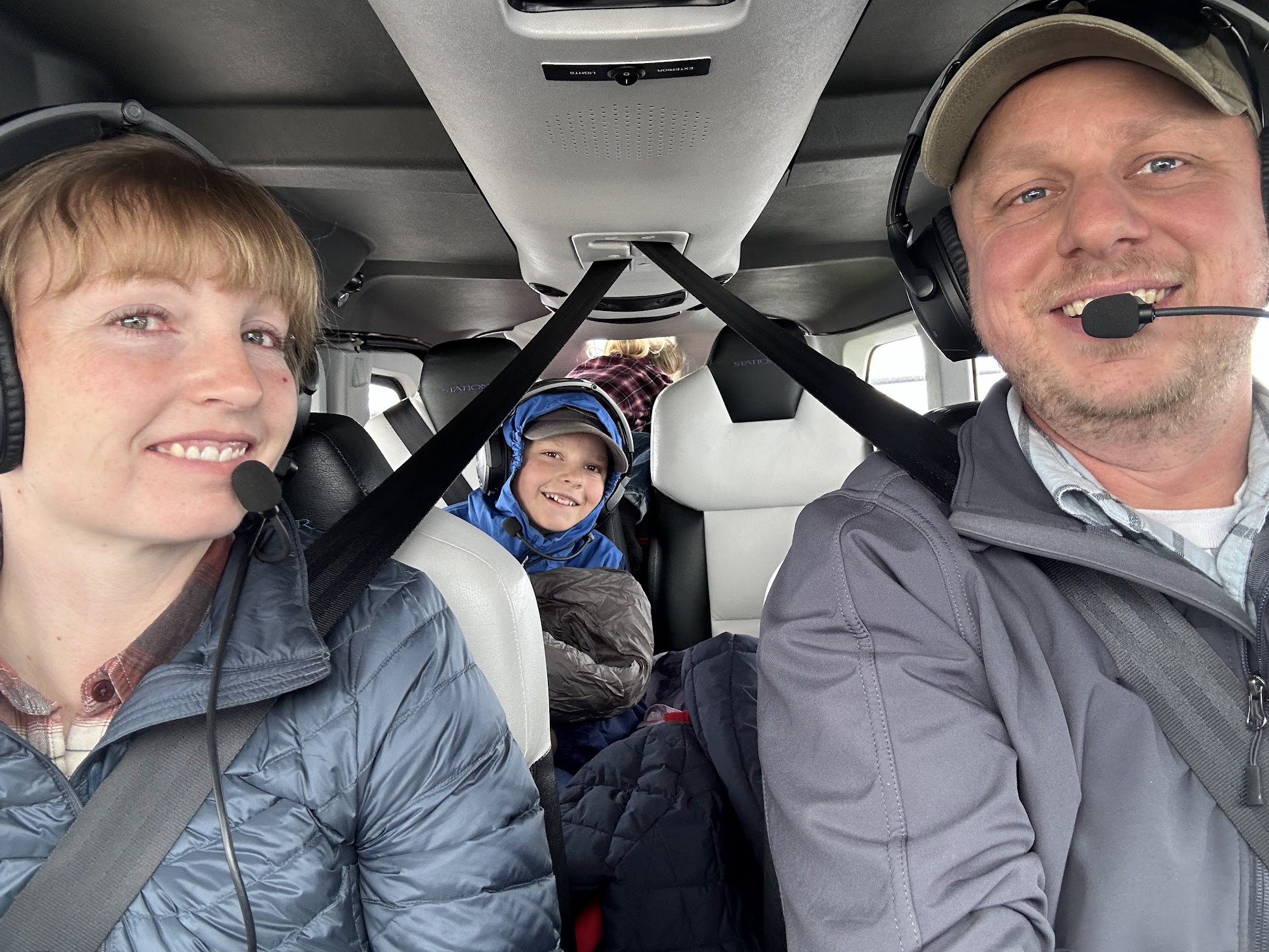
I scaled to twenty million. Then Amazon suspended my account over a phone number.
I built an Amazon business called LeisureQuip. Hot tub chemicals, pool supplies, the unglamorous side of the industry my dad spent his life in. Zero to twenty million in sales in five years. Thirty to forty thousand dollars a day in revenue, almost all of it through one Amazon account.
- Amazon account
- Suspended
- Cause
- Missed phone verification
- Days to reactivate
- 7
- Revenue that week
- Zero
- Owed to key supplier
- $2.0M
- CPA-forecasted tax bill
- $1.5M
- People who knew
- One
Not a customer complaint. Not a product issue. Amazon sent an email about a new policy, the email got buried in the hundreds they send every week, and I missed a twenty-four hour window to verify a phone number. The account went dark for seven days.
I didn't tell my wife. I didn't tell my employees. For seven days I worked the phones and the math. I was looking for a version of the next move that didn't end the company.
I got the account back. LeisureQuip recovered and still runs today, deliberately scaled down to a size that doesn't need me there every day. But that week, I sat there afterward and thought: what if it had been thirty days instead of seven? What if Amazon had changed a policy that took out the whole category? What if my supplier had decided to stop selling to me?
So I started reinvesting everything I could into commercial real estate. Multifamily. Mostly boring assets. Properties that didn't need me to be there.
My income wasn't tied to a single platform anymore. I could step away for a week and the properties kept performing. I could be on the ranch with my kids, and the distributions kept coming.
Was it passive? Not exactly. There's nothing passive about building and managing a commercial real estate portfolio. But it was structurally different. Diversified across properties, tenants, financing. Anchored in something I could put my hands on. And it scaled in a way that an Amazon listing never could.
That structural difference is the thing my dad never built into his business.
I built NPI for the operator I almost was, and you still are.
Most successful operators will never build their own commercial real estate portfolio. Not because they can't. Because it takes years of knowledge, relationships, and operational reps. It takes becoming the operator.
You don't want to become an operator. You already are one. You want the results of real estate. Cash flow, tax benefits, appreciation, real ownership. Without running another business on top of the one you're trying to sell.
Most real estate isn't passive. Owning a building yourself means tenants, repairs, financing, property management. It's another business with another set of operational headaches. The version most operators don't get walked through is real estate as a passive limited partner. You wire the capital. The sponsor does the operating. You get the distributions, the depreciation, and the upside without running anything.
So I built NPI to be the bridge. Workforce multifamily in Idaho and the Intermountain West. Long-hold structure underwritten for the operator near exit. Sponsor co-invests every deal.
I find the deals. I underwrite them. I run the on-site team. I handle the tenants, the repairs, the operations, the boring quarterly cadence. You review the deal, sign the documents, wire the capital, and receive distributions.
The fund is small enough that you'll talk to me directly. Every time. That's not going to change.
I'm a steward of capital, not a salesman for it. The investors who fit NPI think in decades. They trust operators more than advisors. They care about the structure of where their capital lands more than the number on the cover page.
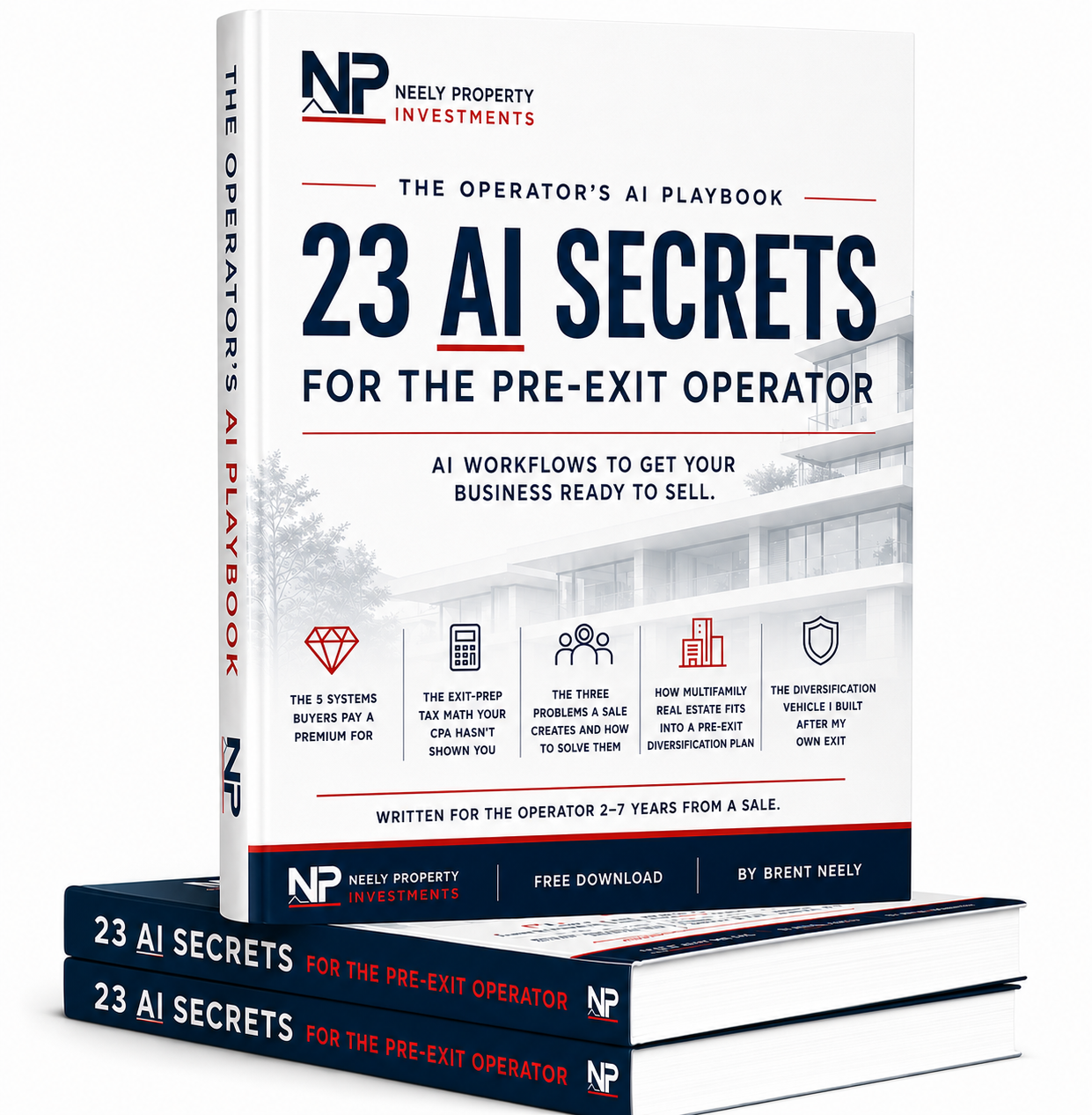
If you'd rather read this in book form.
The AI workflows I'm using to run multiple businesses without an ops team. The tax math your CPA hasn't shown you. Written for the operator two to seven years from a sale.